
Lung Cancer Canada

The Breathe Forward Award

This Award supports practical, scalable solutions to improve how non-small cell lung cancer (NSCLC) is diagnosed.

Search this website

The Breathe Forward Award

Advancing Innovation in NSCLC Diagnosis

The Breathe Forward Award is a $200,000 national innovation challenge led by Lung Cancer Canada and shaped by clinical, health system, research, and lived experience perspectives from across Canada. The Award supports practical, scalable solutions to improve how non-small cell lung cancer (NSCLC) is diagnosed.

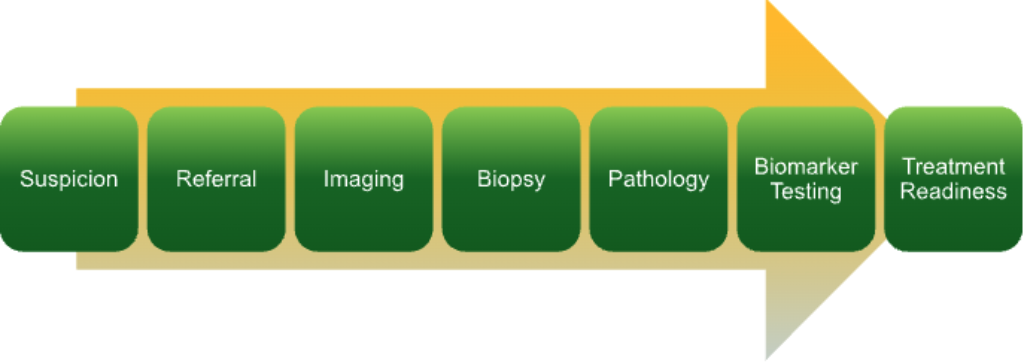
Too many people with lung cancer are still diagnosed too late. Across the diagnostic journey, delays can occur at many points — from suspicion and referral to imaging, biopsy, pathology, biomarker testing, and treatment readiness.

The Breathe Forward Award is designed to help change that.

This Award is made possible through the generous support of Boehringer Ingelheim Canada.

The Challenge in Canada

Lung cancer remains one of Canada’s most urgent cancer challenges.

In 2026, an estimated 32,900 people in Canada will be diagnosed with lung cancer, representing 13% of all new cancer cases. An estimated 19,300 people will die from the disease, representing 22% of all cancer deaths. On average, that means 90 people are diagnosed with lung cancer every day, and 53 people die from the disease.

Despite major advances in treatment, too many people are still diagnosed too late. Approximately 70% of lung cancers are diagnosed at an advanced stage, when treatment is more complex and outcomes are poorer.

Diagnosis is not a single step. Patients may move through suspicion, referral, imaging, biopsy, pathology, biomarker testing, and treatment readiness. Delays can occur at any point and may accumulate across the pathway.

For some patients, the challenge begins before lung cancer is even suspected. For others, delays occur while waiting for imaging, biopsy, pathology, biomarker testing, or coordination between providers and institutions.

These challenges are not experienced equally. Geography, access to primary care, income, rurality, and system capacity can all influence how quickly a patient moves through the diagnostic pathway.

The Breathe Forward Award was created to support solutions that address these challenges and improve how — and how quickly — lung cancer is diagnosed.

The NSCLC diagnostic pathway: from suspicion and referral to imaging, biopsy, pathology, biomarker testing, and treatment readiness.

About the Award

The Breathe Forward Award supports practical, scalable solutions that address the highest-priority challenges identified through Lung Cancer Canada’s NSCLC Diagnostics Innovation Lab, a multidisciplinary initiative bringing together clinical insight, lived experience, and health system leadership.

IMG 2280

The Award will:

1

Focus funding on clearly defined system-level challenges

2

Support initiatives capable of improving diagnostic timelines and patient experience

3

Encourage collaboration across clinical, research, health system, and lived experience communities

4

Generate evidence and learnings that can inform broader system improvement

From Insight to Impact

Through the inaugural Award, Lung Cancer Canada will fund a high-impact project focused on improving diagnostic timelines, coordination, visibility, equity, and system performance in NSCLC diagnosis.

Through the Innovation Lab process, two priority challenge areas were identified:

  1. System-Level Infrastructure & Equity
  2. Diagnostic Pathways & Process Optimization

Who Should Apply

Applications are welcome from:

  • Researchers
  • Clinicians
  • Health system leaders
  • Quality improvement and implementation teams
  • Health system innovators
  • Multidisciplinary collaborations
  • Partnerships involving lived experience

Applicants may apply as individuals, teams, or organizations. The lead applicant must be based in Canada.

Applicants do not need to have a host institution confirmed at the time of application. Full eligibility and funding administration requirements are outlined in the application guidelines.

Funding Available

$200,000

Lung Cancer Canada intends to fund one high-impact project with a $200,000 award.

To maintain flexibility and maximize impact, Lung Cancer Canada reserves the right to divide the $200,000 funding pool across two projects should the adjudication process identify multiple exceptional proposals.

Projects will be supported over a 12-month implementation period.

Challenge Areas

Projects may focus on one or both of the following challenge areas.

System-Level Infrastructure & Equity

How might we improve system-wide visibility and understanding of NSCLC diagnostic timelines so that patients receive timely diagnosis regardless of provider or region?

This challenge area focuses on improving visibility into diagnostic timelines, system performance, regional variation, inequities, and accountability across the diagnostic pathway.

Diagnostic Pathways & Process Optimization

How might we optimize NSCLC diagnostic pathways, processes, or coordination to reduce delays and ensure consistent, high-quality diagnosis across settings?

This challenge area focuses on improving how patients move through the diagnostic pathway, including the coordination, sequencing, and delivery of diagnostic steps.

Good-Fit Projects

Good-fit projects may include pathway redesign, diagnostic coordination models, tools to improve visibility into diagnostic timelines, equity-focused improvement initiatives, or other practical approaches that can be tested, implemented, or evaluated within the funding period.

Projects should be clearly defined, feasible within 12 months, and designed to generate learnings that can inform broader adoption, scale, or system improvement.

Full details on eligible project types and funding requirements are included in the application guidelines.

Medical team collaborating on radiology x rays in 2026 06 22 16 53 36 utc
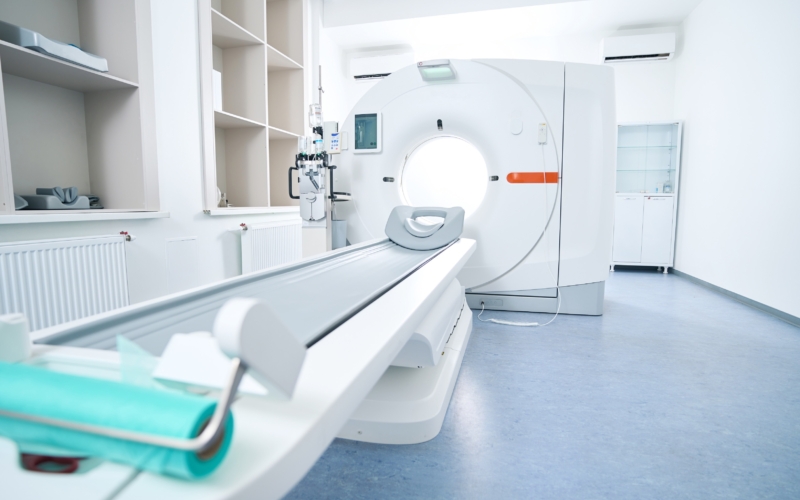
Medical imaging equipment in a hospital room 2026 03 20 01 02 45 utc

What Strong Proposals Should Demonstrate

Strong proposals should demonstrate:

  • Clear alignment with one or both challenge areas
  • Strong potential for real-world implementation, scalability, and broader system impact
  • Meaningful consideration of equity, patient-centredness, and lived experience involvement, where appropriate
  • Potential to generate learnings that can inform broader system improvement

Application Timeline

  • Applications open: July 6, 2026
  • Application deadline: October 16, 2026 at 11:59 p.m. PST
  • Review and adjudication: October–November 2026
  • Award announcement: November 2026, during Lung Cancer Awareness Month
  • Project implementation: January–December 2027
  • Mid-project progress review and learning exchange: June–July 2027
  • Final report due: January 2028
  • Knowledge sharing and dissemination: Q1 2028
  • In fairness to all applicants, late submissions will not be accepted.

Review Process

Applications will be evaluated through an independent adjudication process led by Lung Cancer Canada.

Evaluation will consider alignment with the selected challenge area, potential impact, feasibility, scalability, sustainability, equity, patient-centredness, and knowledge translation.

Boehringer Ingelheim Canada has no role in proposal review, selection, or funding decisions.

Breathe Forward Award

500 words max / 500 mots max
Please upload all relevant application components except CCV as one .pdf or .docx file. / Veuillez télécharger tous les composants pertinents de l’application en un (1) fichier pdf ou docx.
Please upload CCV as one .pdf or .docx file. / Veuillez télécharger CVC en un (1) fichier pdf ou docx.